
ECF4CLIM: An Ending That Marks a New Beginning
December 2025 marked the official end of the ECF4CLIM project. After several years of collaboration, experimentation and shared learning, the project reached its conclusion—but not its end.
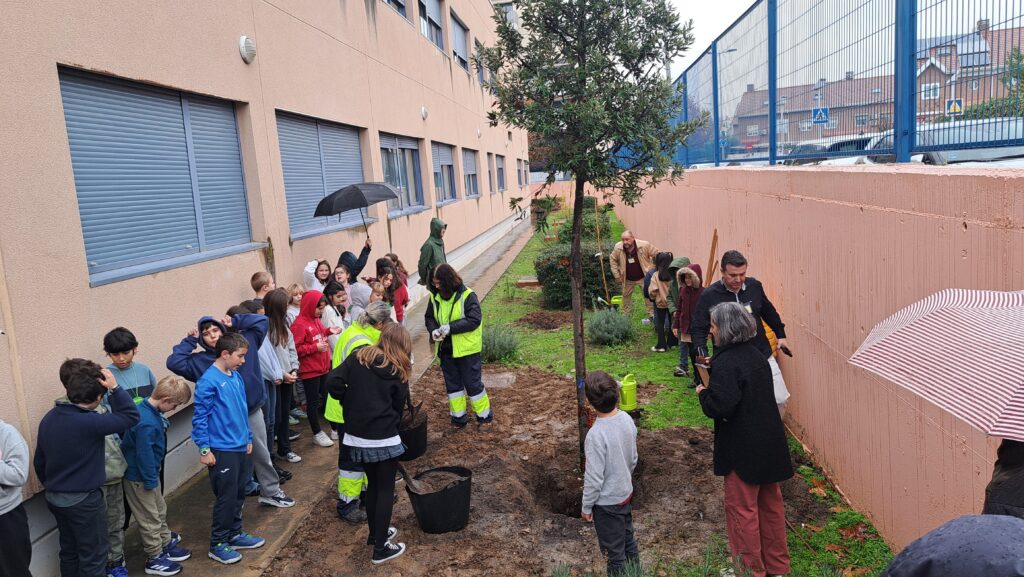
The journey closed with the Final Conference held in Madrid, hosted by CIEMAT from 10 to 12 December 2025. More than a space for presenting results, the conference became a moment of reflection on what ECF4CLIM truly achieved. This was powerfully illustrated during the visit to the Mozart School in Alcalá de Henares, where the project’s ideas were visible in everyday practice.
During this visit, we planted a tree together—a simple but meaningful act carrying a double symbolism. On the one hand, it marked the Grand Prize awarded for the Best Intervention, celebrating collective effort, creativity and impact. On the other hand, the tree became a living symbol of sustainability, representing the seeds planted throughout the project and their growth into the future. It now stands as a reminder that transformation takes time, care and shared responsibility.
What left the strongest impression during the visit was the energy of the children. Their voices carried optimism and confidence in the future. They spoke with knowledge and clarity about sustainability, showed openness to collaboration, and expressed a genuine commitment to building a new world based on harmony, respect and collective action. Their engagement was a powerful confirmation that the work of ECF4CLIM reached far beyond frameworks and tools—it reached mindsets and values.
Throughout the project, students and teachers across all demonstration sites took part in a wide range of activities, from participatory workshops and co-designed interventions to practical actions addressing real sustainability challenges. Over time, these activities helped form teams that learned together, reflected together and built trust. Education became a shared process rather than a one-way transmission of knowledge.
Remarkably, similar experiences emerged across all participating countries—Finland, Portugal, Romania and Spain. Despite different contexts, the same patterns appeared: participation created ownership, collaboration enabled change, and sustainability competences grew strongest when individual, collective and technical dimensions were addressed together.
As ECF4CLIM comes to a close, it is clear that the end of a project is also the beginning of something new. The Roadmap for Sustainability Competences, the participatory approaches, the digital tools and the networks developed during these years provide a strong foundation for future action. They are meant to be reused, adapted and expanded in new contexts.
ECF4CLIM leaves behind more than deliverables. It leaves behind empowered educational communities, strengthened relationships and a generation of young people ready to carry forward the seeds of sustainability. Like the tree planted in Alcalá de Henares, these seeds will continue to grow—shaping education and society well beyond the lifetime of the project.